
Rodents are remarkably versatile creatures, constantly searching for food, shelter, and mates.
Their adaptability is matched by their physical capabilities: rodents can gnaw through a surprising array of commonly used building construction materials, including plastic, concrete blocks, aluminium sheets, glass, improperly cured concrete, and wood.
Rodents’ tenacity allows them to exploit even the smallest opportunities to enter human structures.
Mice, for example, can squeeze through gaps as small as 6 mm, and rats can enter through openings just 12 mm wide.
While traditional rodent control methods like trapping and toxic baits are widely used to reduce rodent populations, these methods are most effective when combined with regular inspection, proper hygiene, and—critically—rodent exclusion.
Exclusion focuses on physically preventing rodents from gaining entry to buildings. Rodent exclusion reduces the need for continual trapping and poisoning but also addresses the root cause of rodent infestations: access.
What Is Rodent Exclusion?
Rodent exclusion refers to the range of methods and materials used to block rodents from entering structures. The core of this strategy lies in identifying and sealing every potential entry point, particularly those larger than 6 mm.
While specialized rodent-proofing products like RodeXit and Rodent Fill Fabric are available to pest management professionals (PMPS) and building owners, effective exclusion is possible even with common construction materials and basic tools.
The ideal rodent-proofing material must discourage gnawing, prevent rodents from enlarging their access points, and be relatively easy to work with.
Exclusion is most effective when paired with the broader 4D approach to pest management: Deny Entry, Deny Food, Deny Water, and Deny Shelter.
By integrating these strategies, you can maintain a rodent-free building environment.
Rodent Entry Points in Buildings
Rodents are persistent and opportunistic, exploiting structural weaknesses and overlooked gaps.
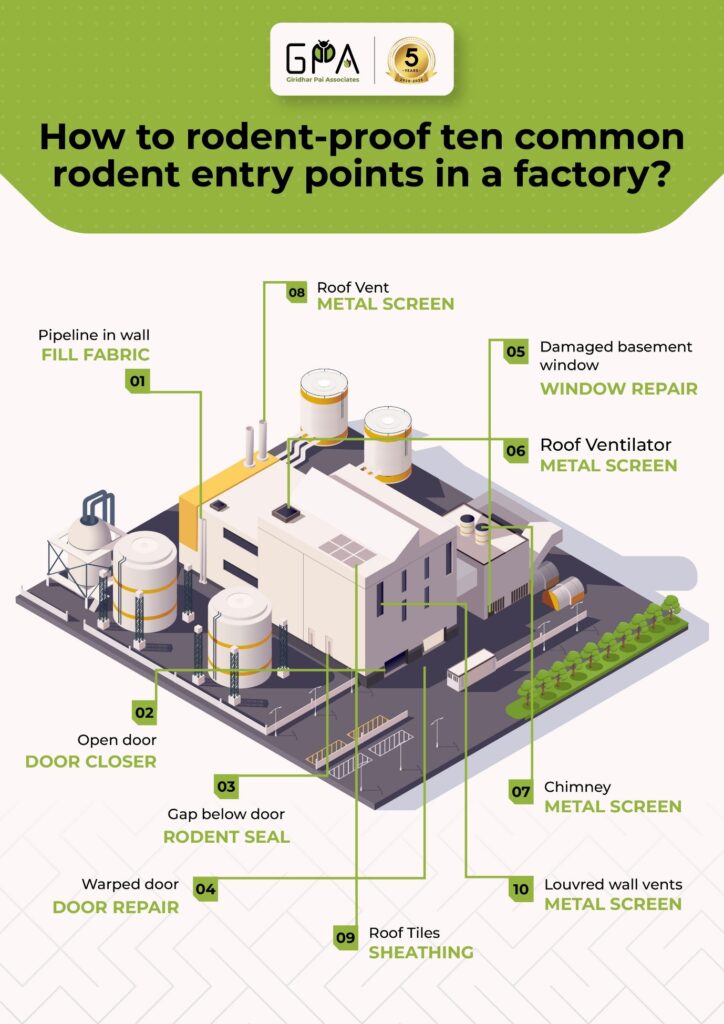
Some of the most common rodent entry points in buildings include:
- Gaps around pipes and conduits (for water, electricity, air conditioning, drainage, and ventilation), which are often installed after wall construction and leave spaces ideal for rodent entry.
- Broken basement windows, warped doors, and unscreened vents.
- Gaps beneath doors.
- Vertical pipes, which agile rats can climb with ease.
- Roof areas, including gaps in roof tiles, ventilators, louvered wall vents, chimneys, and vent pipes.
Challenges in Rodent Proofing
There are no universal standards for rodent exclusion because requirements vary with building size, construction materials, age, and use.
Each building must be assessed individually to develop a tailored exclusion plan.
Additionally, exclusion is not a one-time solution.
Weather, building settling, new construction, and routine maintenance can compromise previously secure barriers.
Continuous inspection, prompt repairs, and ongoing hygiene are essential.
The fundamental goal of rodent exclusion is to prevent reinfestation by denying rodents entry, food, water, and shelter.
Common Construction Materials for Rodent Exclusion
Caulk and Sealants:
Caulk is essential for sealing small cracks and joints. When paired with 0.25-inch (6 mm) metal mesh or screen, it forms a durable barrier against gnawing rodents. Use high-quality, rodent-resistant sealants for added strength.
Metal Screens (Hardware Cloth):
In the United States, metal screens are often referred to as hardware cloth. These are rigid wire meshes of differing sizes. For mice, use screens with 0.25-inch squares; for rats, 0.5-inch squares are sufficient. Install securely over vents, open pipes, and other potential entry points.
Sheet Metal:
Sheet metal is highly effective because rodents cannot gnaw through it. For most applications, a 24-gauge or thicker sheet metal is recommended. Use it to cover larger holes, reinforce doors, or protect vulnerable corners and edges.
Cement and Mortar:
Cement and mortar are suitable for sealing larger gaps around utility penetrations and in foundations. When combined with metal mesh, they create a formidable barrier that discourages rodents from chewing through.
Kick Plates and Door Seals:
Install 24- or 26-gauge galvanized steel or brass kick plates at the base of doors to prevent gnawing. Ensure that all exterior doors have tight-fitting rodent seals (like the RodeXit All-In-One rodent seal) to eliminate gaps.
Rodent Guards for Utility Pipes:
Flat or tunnel-shaped metal guards can be fitted around vertical utility pipes to stop rodents from climbing. For horizontal pipes, use an 18-inch-wide metal disk as a rodent guard, positioned at least 4 feet away from the building to prevent jumping. Seal any gaps between the guard and the pipe with caulk.
Glossy Paint Bands:
Applying a 12-inch band of glossy paint to brick or stone walls—or to pipes 3.5 feet above ground—can deter mice from climbing, as the slick surface is difficult for them to grip.
Implementing Rodent Exclusion: Practical Steps
Inspection:
Conduct a thorough inspection of the building’s exterior and interior to identify all possible rodent entry points, including less obvious areas like utility chases and roof access points.
Seal Gaps and Holes:
Use caulk, cement, metal mesh, or sheet metal to close all gaps larger than 6 mm. Pay special attention to areas where different building materials meet, as these are often overlooked.
Secure Vents and Drains:
Cover all vents, drains, and open pipes with appropriately sized hardware cloth. Check these barriers regularly for damage or tampering.
Reinforce Doors and Windows:
Install kick plates and ensure that weather stripping is intact and effective. Repair or replace any broken windows promptly.
Maintain Hygiene:
Good sanitation outside and inside the building reduces the likelihood that rodents will be attracted to the site. Eliminate food sources, standing water, and potential nesting sites.
Monitor and Maintain:
Rodent exclusion is not static. Regularly inspect and maintain all rodent-proofing measures, especially after renovations, repairs, or severe weather events.
Conclusion
Rodent exclusion remains one of the most effective, long-term strategies for rodent management in buildings of all types. By understanding the capabilities of rodents and the vulnerabilities in building design, you can use readily available construction materials to create a robust barrier.
Remember, successful rodent management is not a one-time effort but a continuous process that combines rodent exclusion with thorough inspection, ongoing maintenance, and diligent hygiene.
Through an integrated approach, you can protect your property, safeguard health, and reduce the costs associated with rodent damage and control.
References:
Bennett, Gary W., Owens, John M. and Corrigan, Robert, M; 2010. Truman’s Scientific Guide to Pest Management Operations, Purdue University and Northcoast Media, LLC.
Badzik, B., C. L. J. DiSalvo, D. E. Buttke, and M. F. Chase; 2014. Rodent Exclusion Manual, Mechanical Rodent Proofing Techniques: a training manual for National Park Service Employees. Natural Resource Report September 2014. National Park Service, Fort Collins, Colorado.