
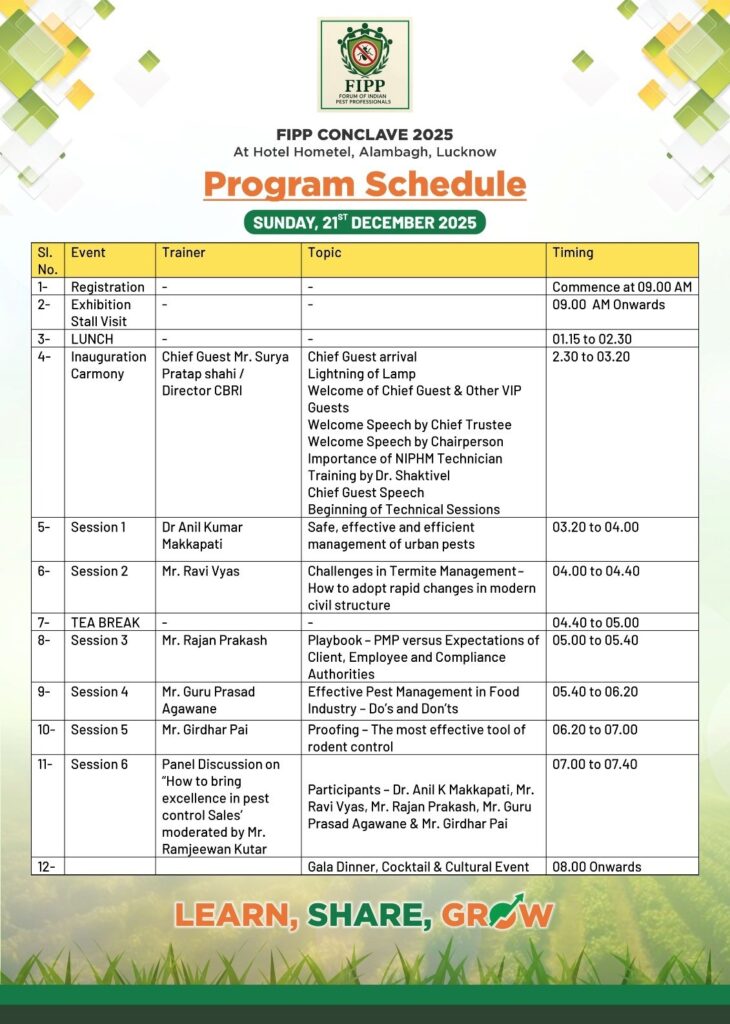
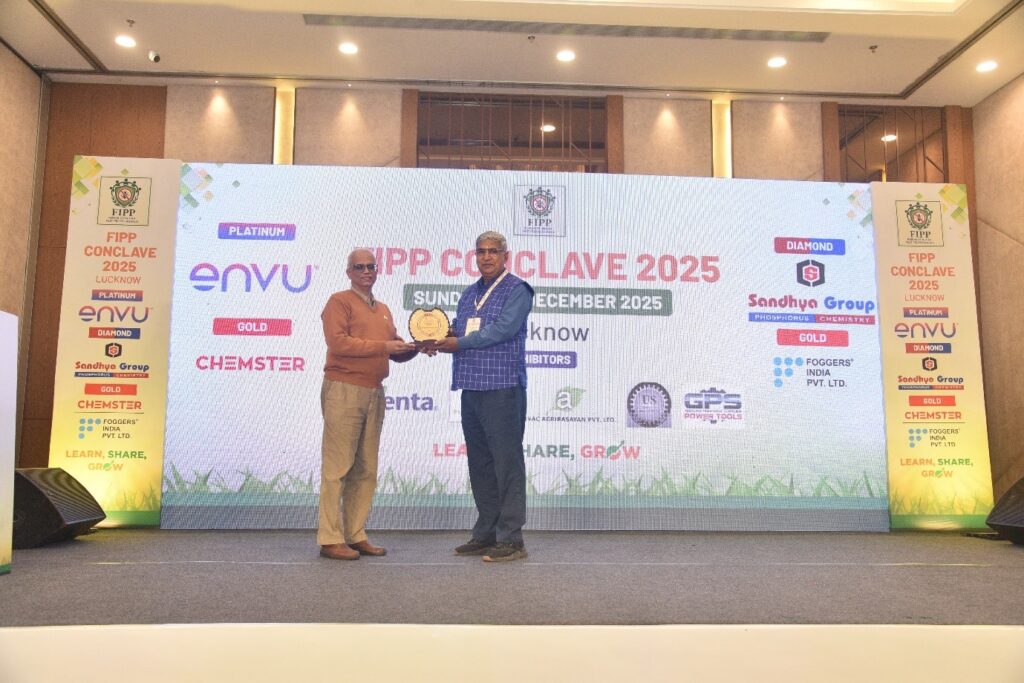
I recently had the opportunity to present at the Federation of Indian Pest Professionals (FIPP) Conclave 2025, held at Hometel, Lucknow, on 21 December 2025.
The conclave, organised as part of a three-day pest control technician training in collaboration with the National Institute of Plant Health Management (NIPHM), Hyderabad, brought together Pest Management Professionals (PMPs) from Uttar Pradesh and neighbouring states.
The afternoon session featured six industry experts, including me, who shared insights with an engaged audience.
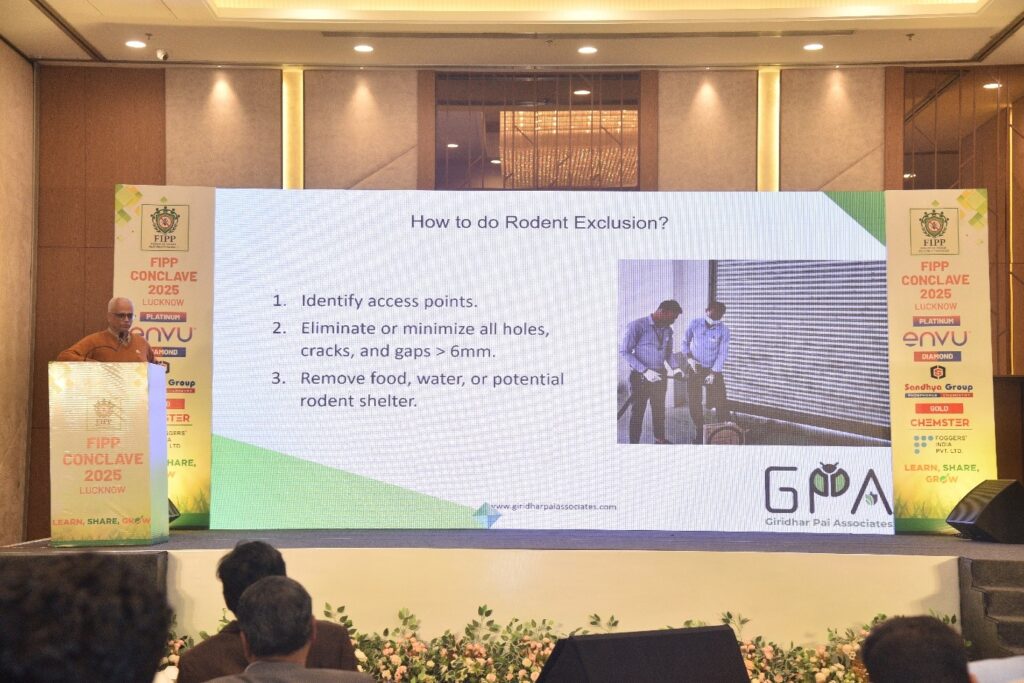
Representing Giridhar Pai Associates LLP (GPA)—India’s leading marketer of innovative rodent-proofing solutions such as the RodeXit All-In-One rodent seal (RodeXit) and the Rodent Proof Fill Fabric (fill fabric), I highlighted the importance of integrating rodent proofing into Pest Control Operators (PCO) service offerings.
Notably, companies like Seva Facility Services Private Limited (Seva Facility) and Pecopp Pest Control Services Private Limited (Pecopp) have already incorporated rodent proofing into their offerings, setting a precedent for others to follow.
I encouraged more PCOs owners in the audience to adopt rodent-proofing as a key component of their pest management services. Rodent proofing adds revenue to PCOs while reducing their costs for monitoring, trapping, baiting, and responding to customer complaints about rodents.
Rodent proofing, when combined with sound hygiene practices, significantly curbs rodent populations around buildings and reduces the number of mice and rats gaining entry.
Importantly, effective rodent proofing doesn’t always require branded products—simple materials like cement, metal sheets, and screens can be highly effective.
However, many Indian customers lack in-house maintenance teams to address pest entry points identified during inspections, making it even more crucial for PCOs to step up with these solutions.
Rodent proofing represents a new PCO revenue stream and enhances customer engagement and satisfaction. Customers who evaluated rodent proofing for its benefits found that it reduced merchandise damage and led them to adopt it on a larger scale, covering all their buildings.
Rodent proofing is not a one-time fix—it demands ongoing monitoring to ensure exclusion barriers remain intact.
Our experience at GPA has shown significant market demand, with distributors such as Seva Facility, Pecopp, and others regularly installing RodeXit and Rodent Proof products for a diverse customer base. As rodents are a nuisance across business segments, rodent proofing is a necessity in practically every industry that operates from buildings, which are vulnerable to rodent entry from gaps and other enabling factors.
For PCOs, a shift from rodent trapping and baiting to proactive rodent monitoring aligns with modern tools, such as remotely monitored rodent stations, to deliver more efficient, scalable solutions.
The FIPP Conclave 2025, the first of its kind, was also an excellent opportunity to connect with leading PCOs already practising rodent proofing using locally sourced materials.
We have received numerous requests from companies seeking specialised training in rodent proofing for their technicians, who will then offer rodent prevention through exclusion to customers.
The high demand for training in rodent-proofing skills and knowledge has prompted GPA to accelerate the launch of its Rodent Proofing Academy workshops across India. At these interactive sessions we shall conduct for PCOs, we shall provide end-to-end training for PMPs, empowering them to offer profitable and effective rodent-proofing services.
My presentation at the FIPP Conclave 2025 covered the essential components of Integrated Pest Management (IPM) of rodents, the situational nature of rodent challenges, inspection techniques for rodents and their signs, and an overview of both traditional and advanced rodent-proofing materials.
I emphasised that rodent exclusion—sealing all potential entry points—is the most effective strategy for managing rodents. Mice, for example, can squeeze through openings as small as 6 mm, and rats through openings above 12 mm, often entering through gaps around pipes, vents, and even open doors or windows. Sealing these rat and mouse entry points with suitable materials is critical to long-term control in any building.
I also discussed important considerations for rodent exclusion, such as cost, material longevity, and the need for regular maintenance of rodent barriers.
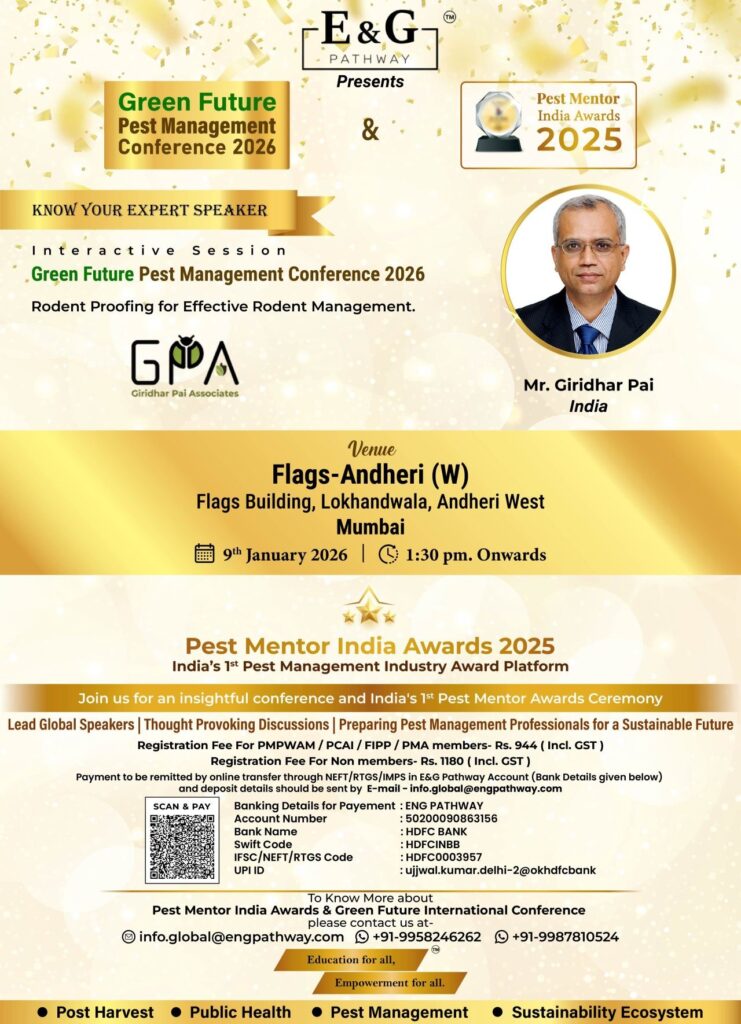
Green Future Pest Management Conference 2026
The cost of rodent proofing depends on factors such as building size, construction quality, and age, while weather and structural changes can affect the durability of the materials.
Continuous inspection, exclusion, sanitation, and monitoring are essential to keep buildings rodent-free and deny those pests access to food, shelter and harbourage inside buildings.
Ideal rodent-proofing materials must be both durable and resistant to penetration.
Common rodent-proofing materials include sheet metal, polyresin-coated stainless steel wool (also called fill fabric), and copper with mortar. I highlighted the roles of caulk, wire mesh, kick plates, rodent guards, aluminium sheet, cement, crack repair compounds, and mortar in effective rodent proofing.
I concluded by spotlighting the two custom-made rodent-proofing solutions available in India—RodeXit, which GPA introduced in 2022, and Fill Fabric, which we launched in 2025.
The above two products offer PCOs a simple, economical, and effective way to deliver lasting rodent protection for their clients, reducing property damage and opening new business opportunities.
I am next speaking on rodent proofing at E&G Pathway’s Green Future Pest Management Conference 2026, which will be held in Mumbai alongside the Pest Mentor India Awards 2025 on 9 January 2026. The event will have five other speakers on non-toxic, green, sustainable pest management
My session on rodent proofing shall focus on practical strategies, preventive design approaches, and effective rodent-proofing techniques essential for long-term rodent management across facilities and environments.
My presentations at the above two events demonstrate GPA’s progress in sustainably introducing rodent-proofing services in India. The USA rodent fill fabric and other rodent proofing products brand Xcluder was available in India about a decade ago, but now RodeXit and Rodent Proof Fill Fabric are two branded product choices for PCOs.
With increasing restrictions on the use of glueboards for rodent trapping and the lack of new rodenticide introductions, PCOS must focus on rodent exclusion as a key strategy in rodent management.
We welcome enquiries from interested Pest Control Operators and building owners regarding adopting rodent-proofing for effective rodent management.