
Flying insect control goes far beyond simply installing fly catchers; it requires a comprehensive strategy that prevents insect entry and efficiently traps those that manage to breach your barriers. In this blog post, we share a real-life case study illustrating how we helped a dental clinic resolve a persistent flying insect problem and maintain a hygienic environment for staff and patients alike.
Starting with the FLYght Duo
Our relationship with the dental clinic began when we supplied them with the FLYght Duo. The device’s sleek appearance complemented their contemporary interiors, and the clinic staff installed it at the reception, where it quickly proved effective at attracting and trapping filth flies and other flying insects.
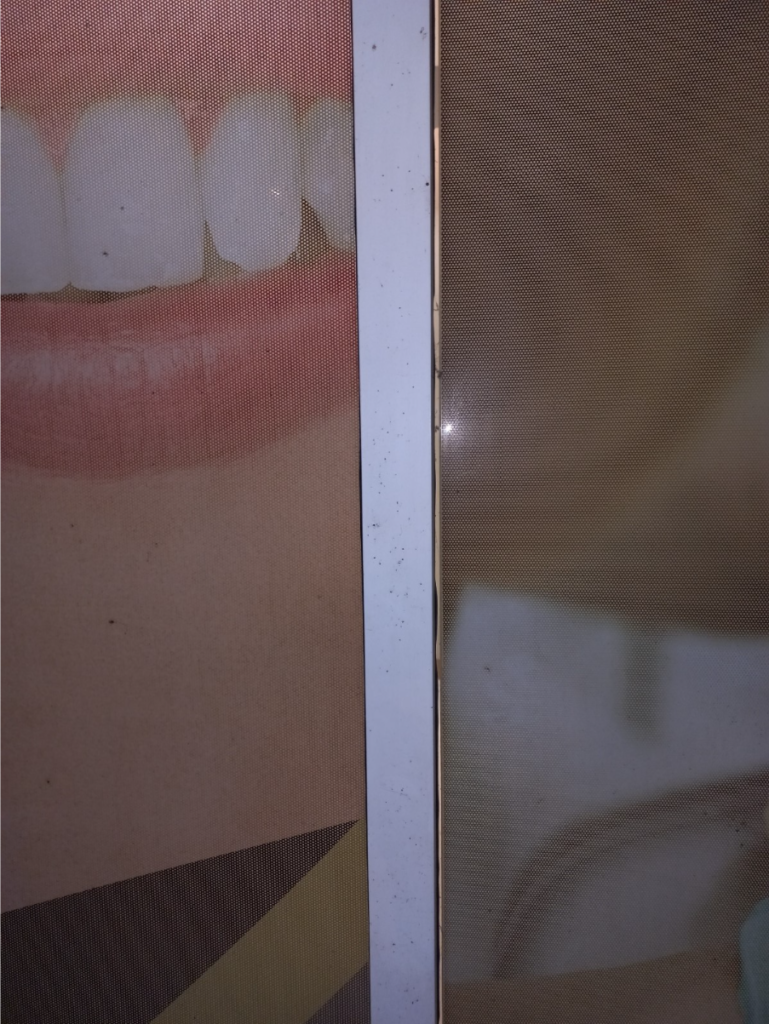
Gap between frame and glass panel at a dental clinic
Identifying Hidden Entry Points
Despite the FLYght Duo’s success, we soon noticed a fly killer device inside the clinic, indicating that flying insects continued to infiltrate the premises. Our investigation revealed a gap between two glass panels, an oversight by the interior contractor. After we recommended sealing the gap, the clinic arranged for a contractor to close it using silicone.
The silicone sealant in the glass panels eliminated a major entry point, providing immediate relief.
However, the problem wasn’t completely solved. When the clinic contacted us again about flying insects inside, a closer inspection revealed gaps at the top and sides of the main glass door, large enough for even larger insects to enter. We advised the clinic to install plastic sleeves around the door’s edges, a step they implemented promptly.
Achieving Lasting Results
Through diligent sealing of entry points, the clinic finally achieved a substantial reduction in insect incursions. The few insects that managed to enter during the routine opening and closing of the main door were efficiently trapped by the FLYght Duo. As a result, the clinic maintained a consistently hygienic, insect-free atmosphere for both staff and patients.
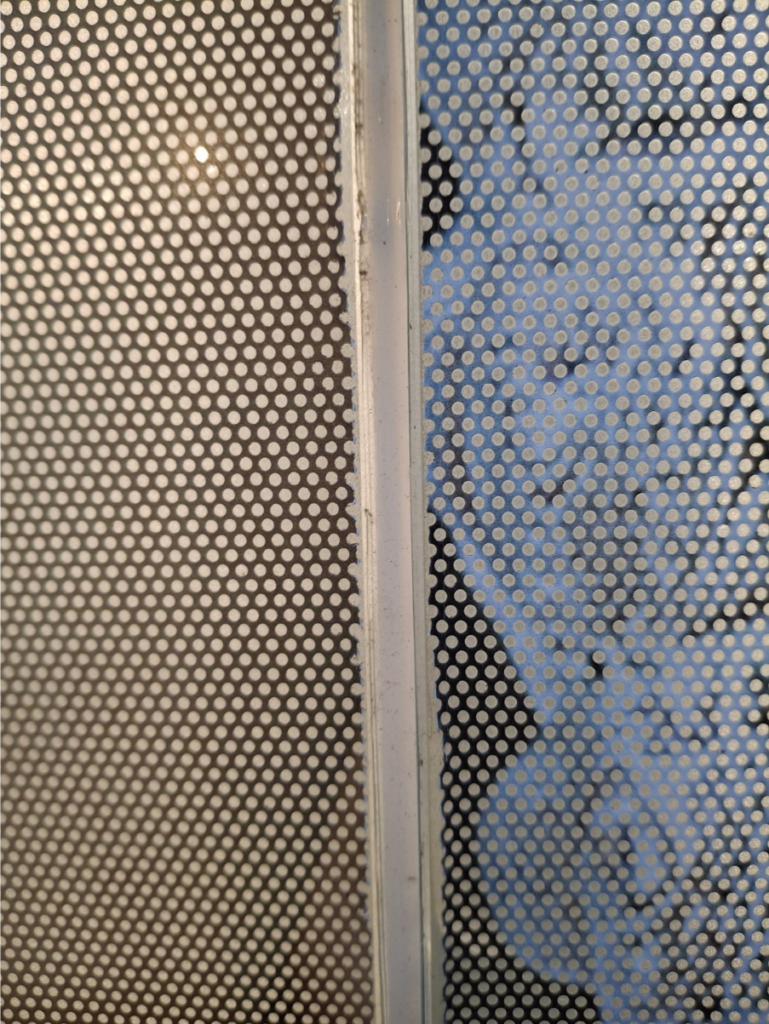
Silicone Sealant used to seal gaps between glass panels of a dental clinic
Key Takeaways from Our Experience
Our work with the dental clinic offered several important lessons about flying insect management in small spaces:
- Selling a Fly Catcher Is Just the First Step: The FLYght Duo proved essential for trapping insects, but it had to be part of a broader strategy. Reviewing the glueboard revealed unusually large filth flies, which led us to discover and resolve a nearly 10 mm gap in the main door.
- Fly Entry Prevention Is Often Overlooked: Many users, including this clinic, initially relied on multiple fly killers, assuming these were the sole solution. Without expert guidance, they missed the critical step of identifying and preventing entry points, as well as ongoing monitoring and hygiene improvements.
- The Marketer’s Role Goes Beyond Sales: As marketers of FLYght Duo, we see our responsibility as extending beyond sales. We actively guide customers to ensure their fly management objectives are fully realised, helping them address structural gaps and optimise pest control measures.
- Small Businesses Need Practical Solutions: This dental clinic, like many small businesses, lacked dedicated maintenance staff, which made pest-proofing a challenge. We provided clear, actionable recommendations, including using the original contractor for silicone sealing and specifying the type of plastic sleeves for the main door.
- Effective Insect Management Requires Ongoing Vigilance: Success in flying insect control demands close observation, coordination, and persistent follow-up. We’re proud to have helped our healthcare client achieve outstanding results with a single FLYght Duo, elimination of ineffective fly killers, and a robust program of entry prevention.
This case study underscores the importance of a holistic, proactive approach to flying insect management, particularly in sensitive environments like dental clinics. By combining effective trapping with diligent entry prevention, businesses can maintain cleaner, safer, and more welcoming spaces for everyone.