Introduction
In today’s rapidly changing landscape of pest management, the need for ongoing education and sustainable practices has never been more critical. Giridhar Pai Associates (GPA) is dedicated to advancing Asian pest management through innovative educational resources that emphasise pest prevention and monitoring, with reduced reliance on chemical pesticides.
Our mission aligns seamlessly with Integrated Pest Management (IPM) principles, which emphasise holistic pest management. With the launch of our educational initiatives, we are excited to equip Asian Pest Management Professionals (PMPs) with additional tools to excel in pest management.
The Importance of Professional Education in Pest Management
Education is the cornerstone of effective pest management. By providing essential training and resources, GPA aims to prepare PMPs to face the challenges posed by pest infestations while minimising ecological impacts. Traditional pest control methods often rely heavily on chemical pesticides, which can have adverse environmental and human health effects. Therefore, it is vital to incorporate alternative innovative strategies that empower PMPs.
In 2024, GPA took a significant step in this direction by launching the PCT Field Guides, making valuable resources accessible to Asian PMPs. These guides have been purchased not only by Indian PMPs but also by those in Sri Lanka, the Maldives, Indonesia, and the Philippines. Through GPA’s PCT Field Guide initiative, Asian PMPs benefitted from the in-depth information provided in six essential PCT Field Guides available to us.
Expanding Educational Resources: The Mallis Handbook of Pest Control
In line with our commitment to ongoing education, GPA is proud to announce our continuing collaboration with GIE Media, Inc. to distribute the Mallis Handbook of Pest Control to Asian PMPs. This handbook, in its 11th edition, updated in December 2025, provides comprehensive insights into pest management practices, ensuring that Asian PMPs have access to the latest developments in the global pest management industry.
Moreover, as 2025 draws to a close, GPA is excited to make another renowned pest management industry resource available in Asia: the esteemed “Truman’s Scientific Guide to Pest Management Operations.” This foundational text not only serves as a crucial operational manual but also acts as a textbook for those enrolling in Purdue University’s IPM courses, which we will delve into further in this blog.
Purdue University’s Integrated Pest Management (IPM) Courses
Purdue University has long established itself as a leader in pest management industry education. American PMPs highly regard Purdue’s IPM courses, which offer online or correspondence learning modes. American pest management companies often rely on Purdue’s courses for employee training, and many states have approved these programs for PMP certification and recertification.
Dr Gary W. Bennett, a prominent faculty member in Purdue’s Department of Entomology and director of its Centre for Urban and Industrial Pest Management (CUIPM), spearheads these IPM courses. His contributions to the pest management industry as an author and speaker have earned him recognition as a thought leader. Dr Bennett designed the courses to be accessible and affordable, ensuring that PMPs can access university-quality training without the constraints of traditional classroom settings.
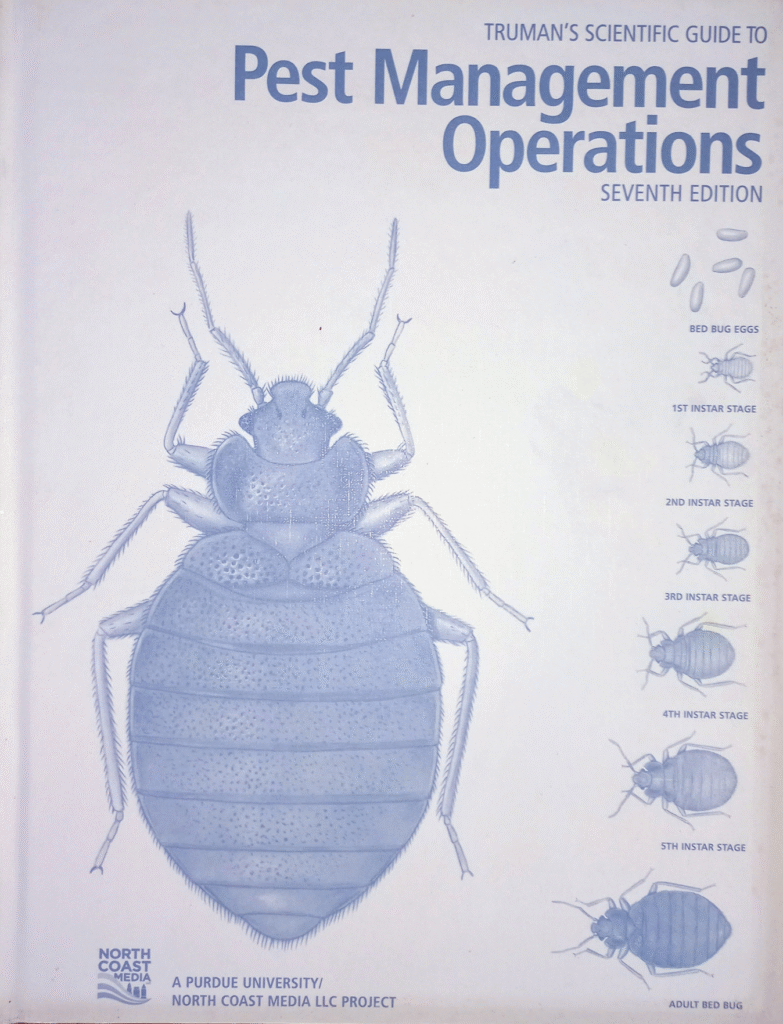
Truman’s Scientific Guide to Pest Management Operations, Seventh Edition
Course Structure and Learning Outcomes
Purdue’s IPM courses emphasise the practical application of pest management techniques. Students work at their own pace, completing assignments and lessons that Purdue faculty evaluate upon submission, whether online or by post. Each course concludes with a final exam, proctored, after which successful candidates receive a Certificate of Completion.
Purdue IPM courses’ curriculum is rigorous yet manageable. Students use Truman’s Scientific Guide to Pest Management Operations, ensuring they have access to vital information that complements their course learning materials. Many PMP students have lauded the knowledge they’ve gained from these courses, finding the content relevant and applicable to real-world urban pest management scenarios.
Truman’s Scientific Guide: A Comprehensive Resource
Truman’s Scientific Guide to Pest Management Operations is a definitive PMP resource blending scientific research with practical application. The 7th edition of the guide, currently available, was edited by Dr Gary Bennett, Dr John M. Owens, and Dr Robert M. Corrigan and contains a wealth of pest management knowledge and insights.
Highlights of the Truman’s Scientific Guide
1. Integrated Pest Management (IPM): The guide advocates for a comprehensive approach, emphasising the integration of biological, cultural, physical, and chemical pest management methods. IPM minimises risks to both humans and the environment while maximising the efficacy of pest management.
2. Detailed Pest Identification and Biology: Accurate pest identification is fundamental to pest management. The guide provides taxonomic keys and in-depth pest descriptions, arming PMPs with essential knowledge of pest life cycles and behaviours to optimise treatment timing.
3. Control Methods: A range of pest control strategies is discussed, including those involving chemical, biological, cultural, mechanical, and physical methods. It empowers PMPs to develop effective, site-specific IPM programs by understanding each approach’s advantages and limitations.
4. Safety and Regulations: Knowledge of local, state, and federal pesticide regulations (the guide focuses primarily on the legislation relating to pest management in the United States) is essential for compliance and safety in pest management practices. The guide emphasises safe pesticide use and application, addressing environmental concerns.
5. Pest Monitoring and Data-Driven Decisions: Continuous pest monitoring is vital for effective pest management. The guide provides insights into establishing action thresholds using devices such as pheromone traps, promoting cost-effective interventions that prevent unnecessary pesticide applications.
6. Sustainability and Technology: The latest edition underscores environmental stewardship, the use of GIS and digital technology, and eco-friendly products to align with modern demands for sustainable pest management solutions.
Benefits to Asian PMPs
Asian PMPs stand to gain significantly from Purdue University’s IPM courses and the Truman’s Scientific Guide. Registration for these courses allows aspiring professionals to earn credentials recognised within the industry. Moreover, PMPs can order the Truman’s Scientific Guide separately for their personal libraries, ensuring they have access to this invaluable resource without enrolling in a Purdue University IPM course.
Conclusion: Elevating Pest Management in Asia
As GPA continues to expand its educational initiatives, we remain committed to enhancing the capabilities of Asian PMPs. The availability of resources such as the PCT Field Guides, the Mallis Handbook of Pest Control, and Truman’s Scientific Guide to Pest Management Operations signifies a step forward in fostering a more knowledgeable and responsible pest management community. By embracing IPM principles and enabling access to quality education, we empower PMPs to implement sustainable practices that prioritise health, safety, and environmental stewardship.
Explore our educational resources today and join us on a journey toward a future of sustainable pest management. For inquiries or to learn more, please get in touch with us through our website to order your pest management education references.